BOOKCASE
By Iconomy Publishing


Latest
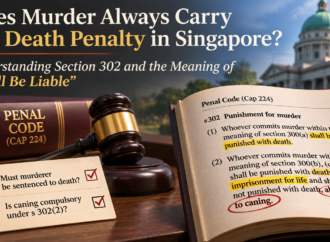
Does Murder Always Carry the Death Penalty in Singapore? Understanding Section 302 and the Meaning of “Shall Be Liable”0
Does a murder conviction always mean the death penalty? And does “shall be liable to caning” make caning compulsory? A closer look at section 302, Mahat, Poh, and Parliament’s 2012 explanation.
READ MORE
Move the Fence, Do Not Demolish It: My Submission to the COE Public Consultation0
- Library
- November 2, 2026
Singapore should move away from an increasingly obsolete engine-and-power COE classification towards a value-based one. But the failure of the present boundary does not, by itself, establish that the purpose behind maintaining differentiated access has disappeared.
READ MORE

What I Got Right, What I Missed, and What Tariffs and DeepSeek Tell Us About Economic Adaptation0
Eighteen months after my April 2025 tariff essay, I revisit what I got right, what I missed, and what tariffs, DeepSeek and the AI investment cycle reveal about a broader economic principle: systems adapt around constraints.
READ MORE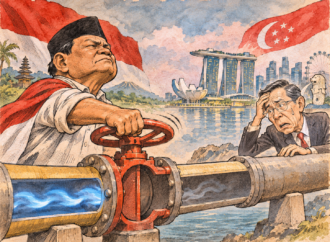
Indonesia’s Gas Cut to Singapore: Two Perspectives Behind the Headline0
- Articles, Thought Leadership
- October 24, 2026
Indonesia’s gas cut makes for a dramatic headline. But from Singapore’s perspective it is a portfolio problem; from Indonesia’s, a resource-allocation decision.
READ MORE
The Bulletin

Singapore Removes Work Permit Employment Period Limit: What It Means for Businesses and Workers0
- The Bulletin
- March 7, 2025
Starting July 1, 2025, Singapore will implement significant updates to its Work Permit and S Pass policies. These changes are designed to offer employers greater flexibility in managing their foreign workforce and provide opportunities for long-term employment for foreign workers. At Iconomy Corporate, we are closely following these developments to help businesses navigate the updated
[Update] Filing Relief Extended: ACRA Waives Late Filing Penalties for BizFile+ Users Experiencing Technical Difficulties0
- The Bulletin
- December 31, 2024
The Accounting and Corporate Regulatory Authority (ACRA) has announced an extension of its waiver on late filing penalties for BizFile+ users encountering technical difficulties while using the revamped BizFile+ portal. This initiative underscores ACRA’s commitment to supporting businesses during the transition to the upgraded platform, ensuring seamless regulatory compliance for companies and service providers. Overview
The Library
Does Murder Always Carry the Death Penalty in Singapore? Understanding Section 302 and the Meaning of “Shall Be Liable”0
Does a murder conviction always mean the death penalty? And does “shall be liable to caning” make caning compulsory? A closer look at section 302, Mahat, Poh, and Parliament’s 2012 explanation.
The Fireplace
Does Murder Always Carry the Death Penalty in Singapore? Understanding Section 302 and the Meaning of “Shall Be Liable”0
Does a murder conviction always mean the death penalty? And does “shall be liable to caning” make caning compulsory? A closer look at section 302, Mahat, Poh, and Parliament’s 2012 explanation.
Recommended

Latest Posts
-

-

-

-

-

How I Hacked My KL Dinner with Microeconomics
- Fireplace
- October 23, 2026


Top Authors
-
iconomy
ADMINISTRATOR

About Bookcase
The Iconomy Bookcase, is a curated sanctuary of business wisdom, built on the belief that powerful ideas deserve a thoughtful space. Founded by Boo Kok Chuon, this platform blends thought leadership, storytelling, and practical education through books, articles, and events. More than just a publishing portal, it’s a living library—where founders, strategists, creatives, and legal minds gather to share insights, challenge norms, and spark meaningful dialogue. From op-eds at The Fireplace to workshops at The Townhall, the Iconomy Bookcase is where business meets reflection, and strategy meets soul.
Iconomy Holdings Pte. Ltd.
39 Woodlands Close
#08-61 Iconomy Corporate Suites
Singapore
Phone & Fax
info@icon.sg
Latest Posts
Copyright © 2026 Iconomy Holdings Pte. Ltd.